
-

Should We Have Tolerance for Different Ideologies in the Workplace?
Events of the past few weeks have heightened an already fraught environment. Hardly a week goes by without another story about discrimination, violence, and intolerance (yes, all sides do claim this one). The past few weeks have seen a more vocal push for discrimination against minorities and women. From James Damore’s memo claiming that women are biologically inferior to men in business and particularly in the tech field, to the white nationalist rally in Charlottesville, we are seeing an increasing desire to ensure that all voices are heard, including what we’ll politely call “politically incorrect” thoughts.
-

Watch for These Types of Biases When Supporting Your Team
Our last blog post on diversity and inclusion addressed specific biases related to hiring. This week, we’re covering the types of biases you might encounter as you support your team. As a refresher, unconscious biases, which are filters through which we process information and make judgments quickly, serve as the starting point for understanding how to counteract the challenges we all face around diversity and inclusion. You may already be familiar with the term unconscious, implicit bias, but did you know that there are over 150 cognitive bias types that psychologists have studied?
-

Watch for These Types of Biases When Hiring Your Next Employee
Unconscious biases, which are filters through which we process information and make judgments quickly, serve as the starting point for understanding how to counteract the challenges we all face around diversity and inclusion. You may already be familiar with the term unconscious or implicit bias, but did you know that there are over 150 cognitive bias types that psychologists have studied? We find that they’re a great way to analyze how interactions play out in the workplace and beyond. We’re going to cover a few bias types that relate specifically to recruiting.
-

Are We at a Tipping Point for Sexual Harassment and Gender Discrimination in the Workplace?
The promise of startup culture when it was first realized as such was to be a utopia, filled with brilliant humans making the world a better place. People would be employed at a startup due to fairness, after all, startups are all about meritocracy. Unfortunately, that’s not the way things work, and we’ve seen that while there have been some changes (we can dress casually and drink beer and cold brew in the office, for example), unfortunately, gender discrimination and sexual harassment is as prevalent as ever.
-
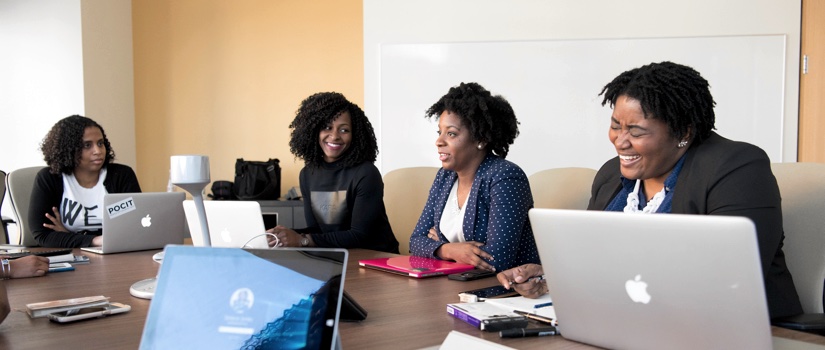
Creating Effective Employee Resource Groups
Members of underrepresented groups within a company, whether women, different ethnic minorities, LGBTQ, veterans, differently abled, parents, etc, may feel isolated at a company, may lack a sense of belonging and support, and may not feel as though their needs are being met. One way to support them is to create an employee resource group (ERG). While there are a variety of benefits (outlined below), there’s also been an increasing concern over the potential lack of intersectionality and creation of ‘echo chambers’. These concerns, while valid, don’t necessarily mean we should do away with ERGs.
-

Closing the Gender Wage Gap in Boston
The gender wage gap issue is complex, but just because it’s complex, doesn’t mean it’s not real. Women make up almost half of the workforce and have more college and graduate degrees than men. Yet we still see a 20% wage gap on average in the US. Massachusetts fares better than many states, but there’s still a long way to go. As Boston is our home, we’re proud to see the work that’s being done here and at the state-level to improve gender pay equity.
-

On Everyday Empowerment, Creating a Work Environment that is Beyond Equality and Living an Authentic Life
May’s Inclusion Geeks event was hosted by EF Tours in their Cambridge office. Panelists shared their stories and advice around the evening’s theme: advocating for work empowerment and creating cultures that emphasize authenticity. Lilah Williams, Director, EF Educational Tours Lilah Williams from EF Tours kicked off the evening with her discussion around Everyday Empowerment. She started her career at EF over 13 years ago and shared that female empowerment conversations hadn’t been something she thought about frequently, until last year. For her, female empowerment is a mentality, just the way she was brought up.
-

What Tech Company do You Want to Work For? Start With Those that Highlight Diversity and Inclusion
It’s been said you never get a second chance to make a first impression. Whether you believe this or not, it’s worth noting that first impressions do matter. For many, your website is just that. If you’re interested in attracting people who are different from those in your existing networks, a great place to start is your website, as that’s just how many potential candidates might first ‘meet’ you. We’ve listed some examples of websites that took the time to make it clear that they are looking to cultivate a diverse team and are striving for an inclusive culture.
-
Why Getting Local Matters for Diversity and Inclusion
We talk a lot about creating a diverse workforce, but we can hardly do that without a diverse community to draw from. Here in Boston, most non-white people live in Roxbury, Dorchester and Mattapan. Last week I attended an event put on by TUGG and the Boston Foundation that explored Roxbury, a neighborhood of Boston that has been rapidly gentrifying over the past few years. Boston, like many American cities, is unaffordable for people who are making less than corporate/tech salary wages.
-

9 Ways to Support Introverts in Meetings
At least one-third of people are introverts, according to Susan Cain’s book Quiet: The Power of Introverts in a World That Can’t Stop Talking. I’m actually one of them, and my introvertedness manifests itself in a specific way. Some introverts are perfectly fine speaking publicly with prepared remarks, but have a difficult time thinking on their feet. Others hate the idea of public speaking with prepared remarks, but have no problem thinking on their feet (that’s me!). Others may be okay doing all of it but will be completely drained after, or are absolutely incapable of doing any of it.
-
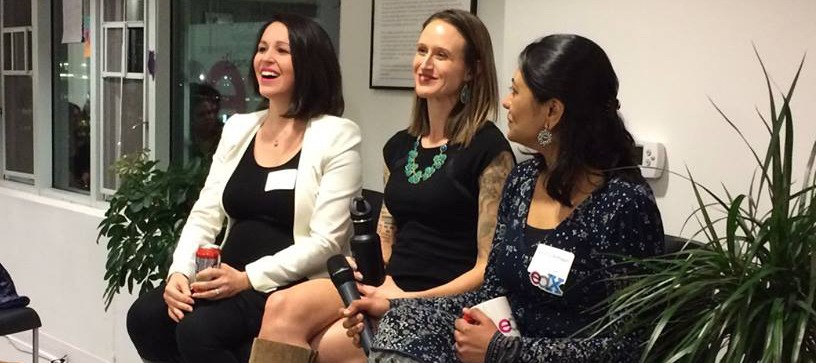
On Returning to the Workplace After Becoming a Mom, Traveling Solo, and Dealing With a Cancer Gene
We had a great lineup of speakers at our February Inclusion Geeks event hosted by edX. The presenters opened up about their personal lives and shared anecdotes of empowerment and strength. Keep reading to find out what returning to work after becoming a parent can feel like, why you should plan your next travel adventure today, and what it takes to stay positive in tough situations. Why being assertive benefits you and your company Nimisha Asthagiri, a Principal Software Engineer at edX, came to the U.S. from India when she was three years old.
-
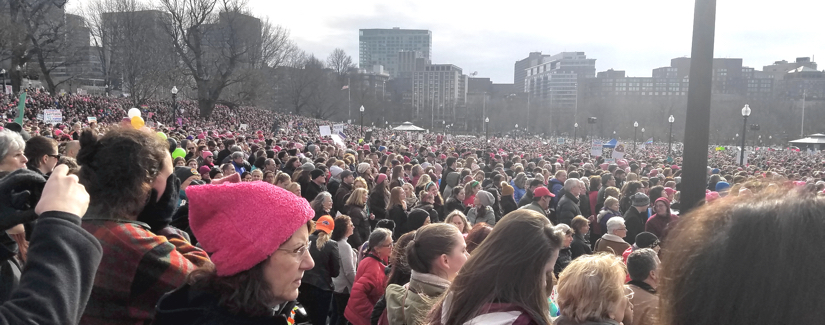
Why We’re Taking a Stand
When we first launched Inclusion Geeks, we were very clear about staying neutral in our political stance. We want to create an inclusive and welcoming environment for all women in STEAM*. We appreciate a diverse set of opinions and want all women to feel comfortable sharing their thoughts, but we also believe in positivity, inclusivity, transparency, science, provable facts and the advancement of women. It’s been, to say the least, a challenge to square the rhetoric coming out of the current administration with any of our goals.