
-

Why Identity Feels Risky to Talk About Right Now
Over the past few years, we finally started having more open conversations about who we are (beyond mere working styles) and how we show up in the workplace. These were conversations that, for a long time, had no place in professional settings. But just as quickly as those doors opened, they’ve started to close again. The pushback has been swift and loud, and in many cases, effective. That matters because at the end of the day, we’re human. And in a workplace culture shaped by capitalism, productivity metrics, and power dynamics, it’s easy to forget that.
-
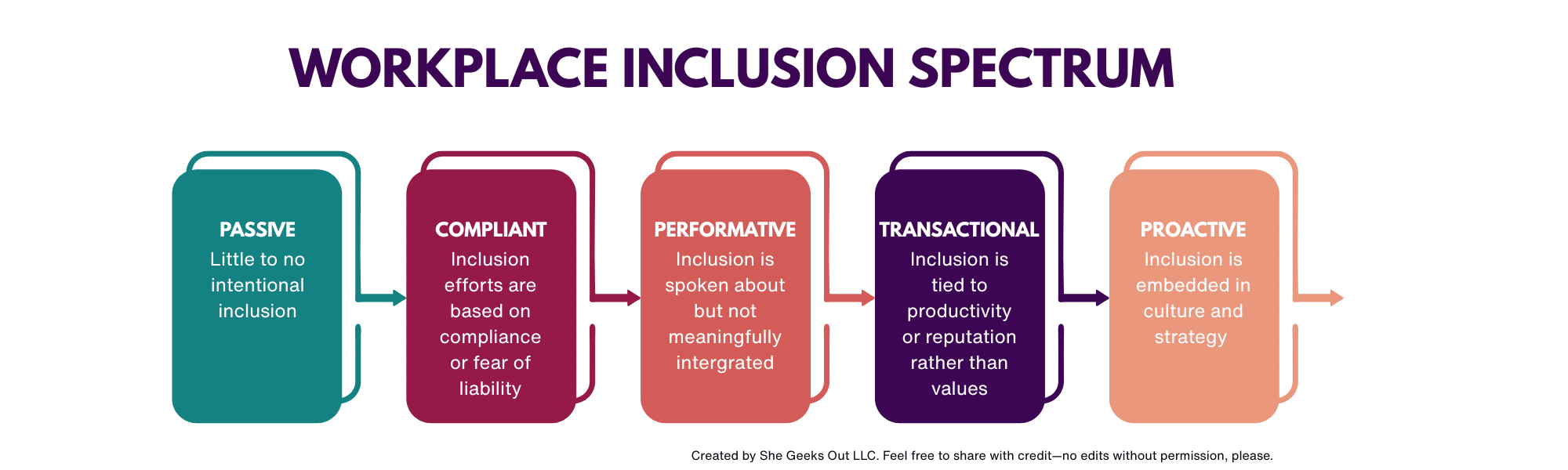
Where Does Your Workplace Fall on the Inclusion Spectrum?
Inclusion isn’t an on-off switch. It’s not something your workplace either “has” or “doesn’t have.” Inclusion is the work that goes into creating a felt experience of belonging within an organization. It means creating a welcoming environment in which every person is valued and can fully participate, regardless of their characteristics or identities. These actions show up in decisions, interactions, policies, and behaviors. And like any practice, inclusion exists on a spectrum (we sometimes refer to this as the difference between ‘surface’ inclusion and ‘real’ inclusion). Some workplaces are just beginning to explore what inclusion looks like.
-
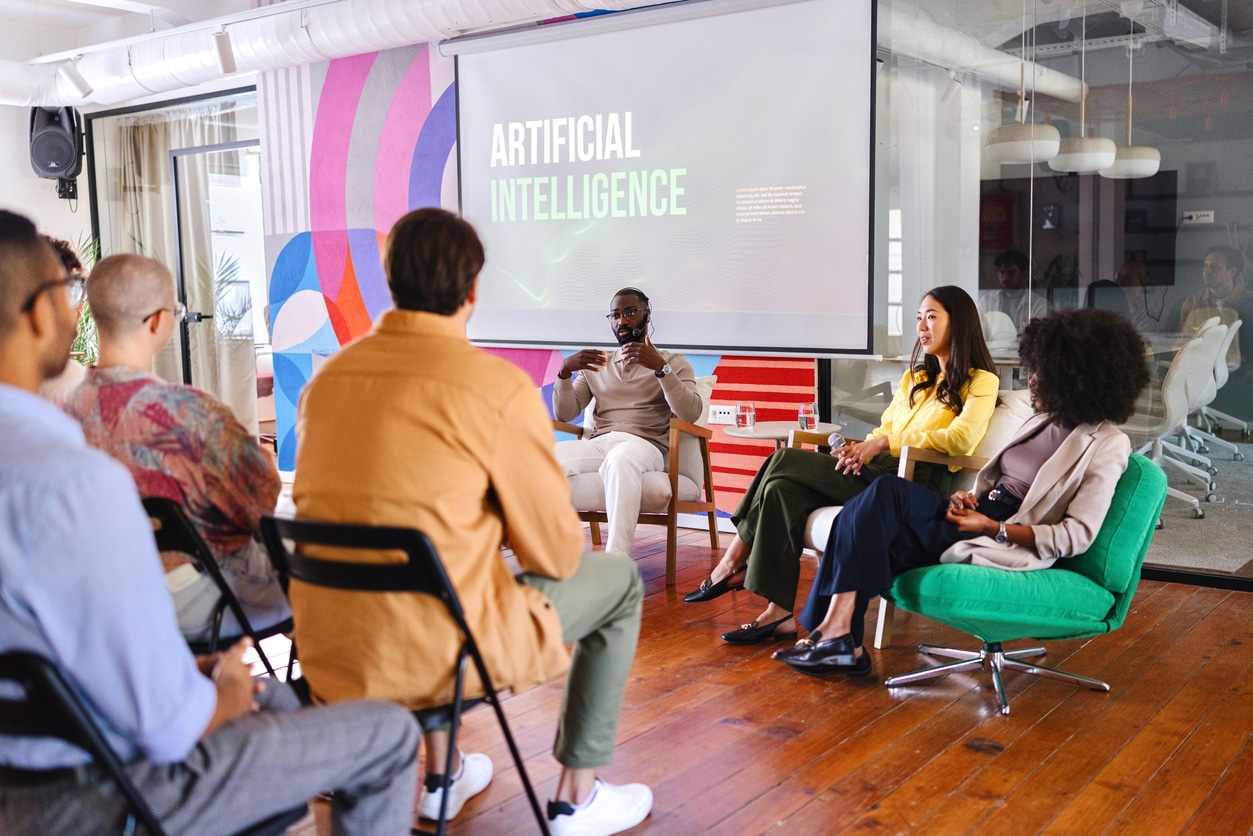
Are Your Meetings Still Inclusive in the Age of AI?
Artificial intelligence is no longer a futuristic concept—it’s part of many organizations’ daily workflows. From scheduling meetings to drafting agendas to summarizing conversations, AI is rapidly becoming a co-facilitator in how we gather and collaborate. At first glance, the benefits seem obvious. Meetings run more efficiently, notes get captured with minimal effort, and accessibility tools are more widely available—dreamy! But in reality, something more complex is happening. When AI becomes part of how we meet, it can subtly reshape communication, trust, and participation. The very tools that promise progress can, if left unchecked, reinforce inequity or erode connection.
-
Webinar Recap: Practical Strategies for Leading an Inclusive Small Business
Felicia, our fearless co-founder, recently hosted a vibrant and jam-packed webinar on Practical Strategies for Leading an Inclusive Small Business. Drawing from over a decade of experience running Inclusion Geeks, she shared what it takes to lead with heart, equity, and strategy—even when resources are tight. Whether you’re managing a team of 2 or 100, inclusion isn’t a business imperative.
-

When Power Feels Threatened: Reclaiming Psychological Safety at Work
Psychological safety—originally created to protect workers from punishment for speaking up—is now, in some cases, being misused to protect those in power from discomfort. Introduced by Harvard researcher Amy Edmondson, the concept was framed to make it safe to take interpersonal risks at work: asking questions, sharing dissenting views, and surfacing mistakes. It’s become a key pillar of inclusive workplaces for a reason—it helps people share their thoughts without fear. But lately, something’s changed.
-

Inclusive by Design: How Small Details Create Big Culture Shifts
As more employees return to the office—whether part-time, full-time, or somewhere in between—companies face a familiar but urgent question: Are we making space for everyone or just for some? Inclusive design is often misunderstood as just a checklist for accessibility. But in reality, it’s something deeper. It’s a mindset that invites care, flexibility, and thoughtfulness into every part of how we build our workplaces. And here’s the part many companies miss: even when thoughtful changes are made, they often forget to talk about them. The result is a missed opportunity to build trust, signal belonging, and help people feel genuinely…
-
What Happens When We Stop Protecting Workers
Why the dismantling of NIOSH isn’t just a public health crisis—it’s a workplace inclusion crisis Inclusion goes beyond just good vibes in meetings. It includes protection, and asks who is left behind when that protection is stripped away. That’s why the recent dismantling of the National Institute for Occupational Safety and Health (NIOSH) under HHS Secretary Robert F. Kennedy Jr. should have everyone who cares about inclusion sounding the alarm. More than 800 public servants were laid off.
-

Webinar Recap: Understanding Neurodiversity and Non-Apparent Disabilities at Work
Workplaces are full of assumptions about what “good” looks like in behavior, communication, and performance. But not everyone navigates the world in the same way, and that’s especially true for neurodivergent and disabled people. In our recent webinar, Beyond What Meets the Eye: Understanding Neurodiversity and Non-Apparent Disabilities at Work, we unpacked how to create environments that don’t just include but actually work for people with non-apparent disabilities and cognitive differences.
-

When the Middle Gets Lost: Supporting the ‘Steady Performers’ Who Hold Your Culture Together
Workplace conversations tend to focus on three groups: high performers chasing the next big thing, new hires learning the ropes, and employees struggling and needing extra support. But somewhere in between is a large, often invisible group—the steady, reliable, middle-of-the-pack employees who keep everything running. They’re not angling for promotions, adapting to new systems, or requiring urgent intervention. They show up, get the work done, and often act as informal culture carriers—mentoring quietly, smoothing out conflict, and filling in the gaps no one notices. And yet, they’re rarely centered in professional development plans, feedback cycles, or retention strategies.
-

How to Lead a Small Team Without an HR Department – Part 1: Hiring With Clarity and Care
If you run a small business, you’re probably managing people without a formal HR department, and that can feel like trying to build the plane while flying it. You’re not just responsible for growing the business. You’re also the recruiter, interviewer, onboarding lead, and culture-setter.
-

What Even Is Normal at Work and Why It Matters for Inclusion
One word appears more often than we realize in meetings, job descriptions, and hallway conversations: “normal.” We ask what time the team normally starts, comment on someone’s unusual behavior, and write policies regarding normal working hours, dress codes, and behavior. But what exactly do we mean by normal? And more importantly—who gets to decide what’s normal? The word may seem harmless or even helpful. It implies stability, expectations, and standards. But in reality, “normal” can be one of the most exclusive words in the workplace.
-

Building a Better Future for Women at Work: Webinar Recap
Last week we hosted an incredible conversation on the challenges—and opportunities—facing women in the workplace today. Inclusion Geeks Co-Founder and Partner Felicia Jadczak facilitated a thoughtful and engaged group of attendees to discuss pay equity, workplace advancement, caregiving responsibilities, and the real structural barriers women continue to face. We focused on real, tangible solutions that organizations can implement to create lasting change. Here’s a look at the key takeaways from our discussion: The State of Women in the Workplace We kicked things off with a reality check on where things stand.